Computational screening of ultra‑high‑temperature reactor materials (>5000 °C) using QFG/BSM‑SG proxy metrics
Abstract
We present a practical screening workflow for ultra‑high‑temperature reactor structures targeting survival beyond 5000 °C under multiple environments (vacuum, vacuum+plasma, inert gas+plasma, air+plasma). Instead of simulating a literal temperature of 5000 °C directly, we rank candidate ceramics and composites with proxy metrics that correlate with extreme thermal resilience: cohesive/lattice energy, elastic constants, dynamical stability (phonons), defect/diffusion barriers, and oxidation/ablation resistance. Candidates are generated as families of UHTCs (carbides/borides), high‑entropy carbides/borides, and gradient composites with protective SiC skins. We incorporate exposure duration (1 s / 10 s / 60 s) and pulsed plasma duty (fixed at 6.9%) into the score.
1. Problem statement
Quartz glass (~1600 °C melting) is not suitable for reactor regions exposed to extreme heat loads. We seek materials and layered architectures that remain structurally stable and resist ablation/oxidation at equivalent thermal loads associated with >5000 °C environments. Because direct ‘melting point prediction’ at 5000 °C is notoriously model‑dependent, we focus on a proxy‑based approach suitable for iterative design and experimental validation.
2. Method overview
The workflow is: (i) generate candidates → (ii) estimate proxy metrics (QFG‑DFT / BSM‑SG‑inspired) → (iii) rank by scenario‑specific score → (iv) iterate.
Proxy metrics used (normalized 0..1 unless noted):
· Refractory proxy (0..10): combines cohesive energy / lattice energy with high‑temperature stability indicators.
· Oxidation proxy: ability to form protective, slow‑growing surface layers (e.g., SiC/SiO₂, Al₂O₃, HfO₂/ZrO₂‑based) and resist volatilization.
· Thermal shock proxy: resistance to thermal gradients/cycling (CTE mismatch + toughness surrogate).
· Vacuum proxy: sublimation/vapor pressure resistance at low pressure (lower volatility).
· Plasma proxy: erosion/ablation resistance under energetic ion/electron fluxes.
3. Candidate generator
Candidate families include:
• Baseline UHTCs: HfC, TaC, ZrC, TiC; HfB₂, ZrB₂, TaB₂, TiB₂; and mixed diborides/carbides.
• High‑entropy carbides (HEC) and borides (HEB): multi‑principal‑element (4–6 metals) in a single carbide/boride lattice.
• Gradient composites: a tough refractory core with a SiC‑skin (and optional interlayers) to improve oxidation/ablation behavior.
• Additives: small fractions of SiC, carbon, or oxide formers (e.g., Al‑containing phases) treated as modifiers in the proxy model.
4. Environment scenarios and duration model
We rank materials in four regimes:
1) Vacuum.
2) Vacuum + plasma with near‑zero O₂ (trace only) and pulsed plasma duty fixed at 6.9%.
3) Inert gas (Ar/He) + plasma with duty 6.9%.
4) Air + plasma (oxidizing) with duty 6.9%.
Exposure duration is parameterized at 1 s / 10 s / 60 s. For plasma scenarios we use an effective damaging time T_eff = duty × duration, representing pulsed exposure; oxidation influence is minimized for near‑zero O₂ in vacuum+plasma.
5. Results: top‑ranked candidates
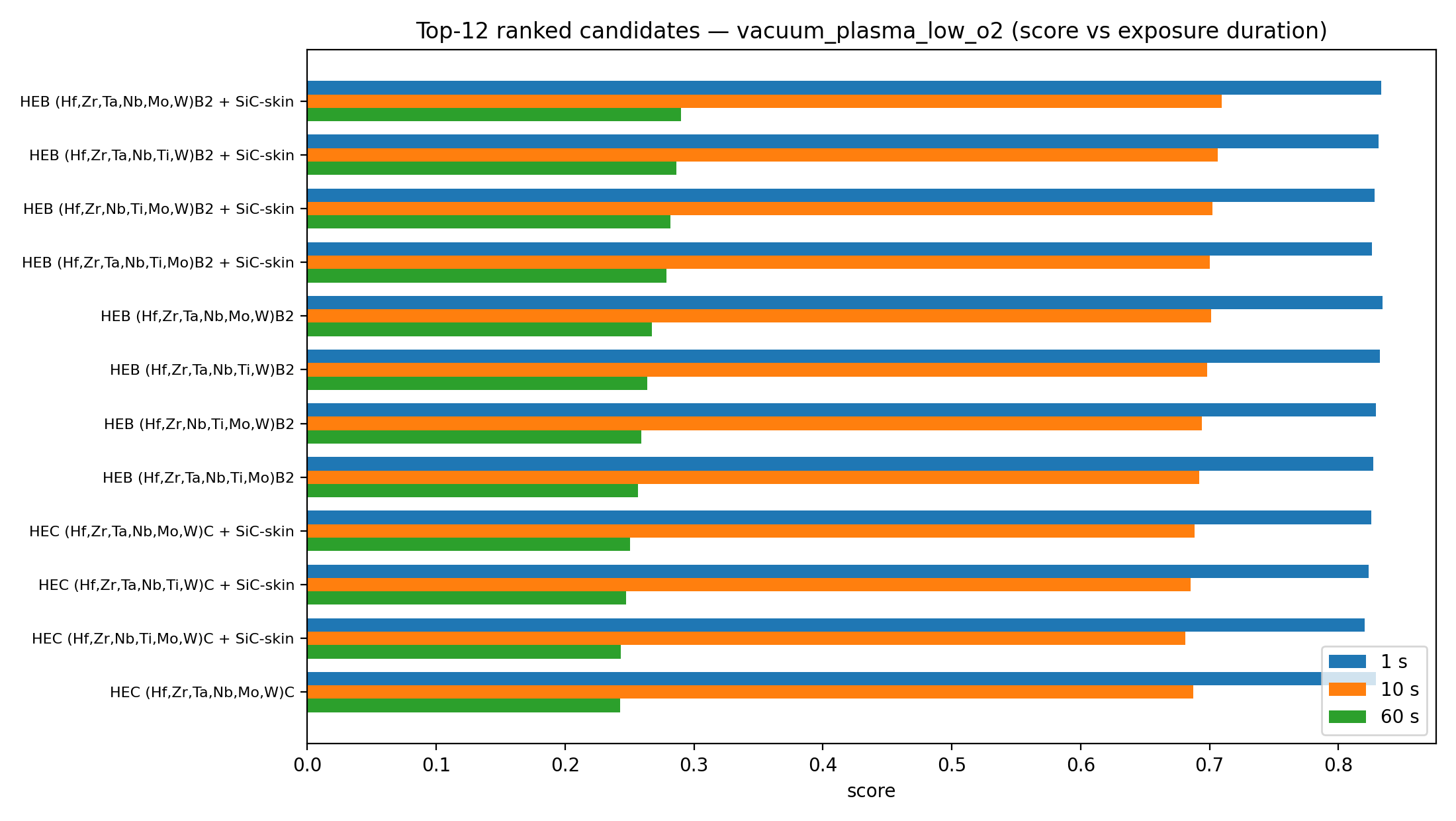
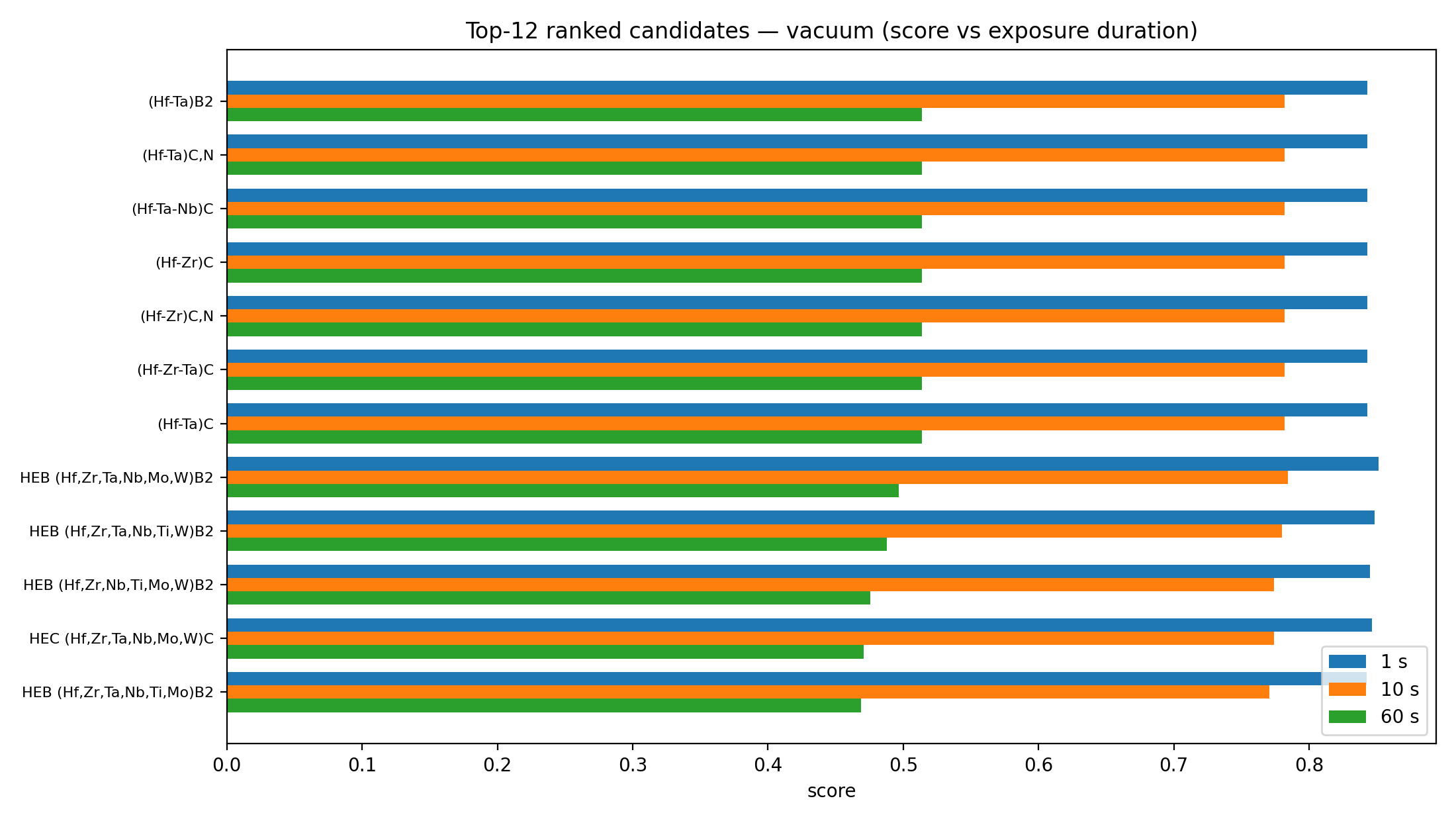
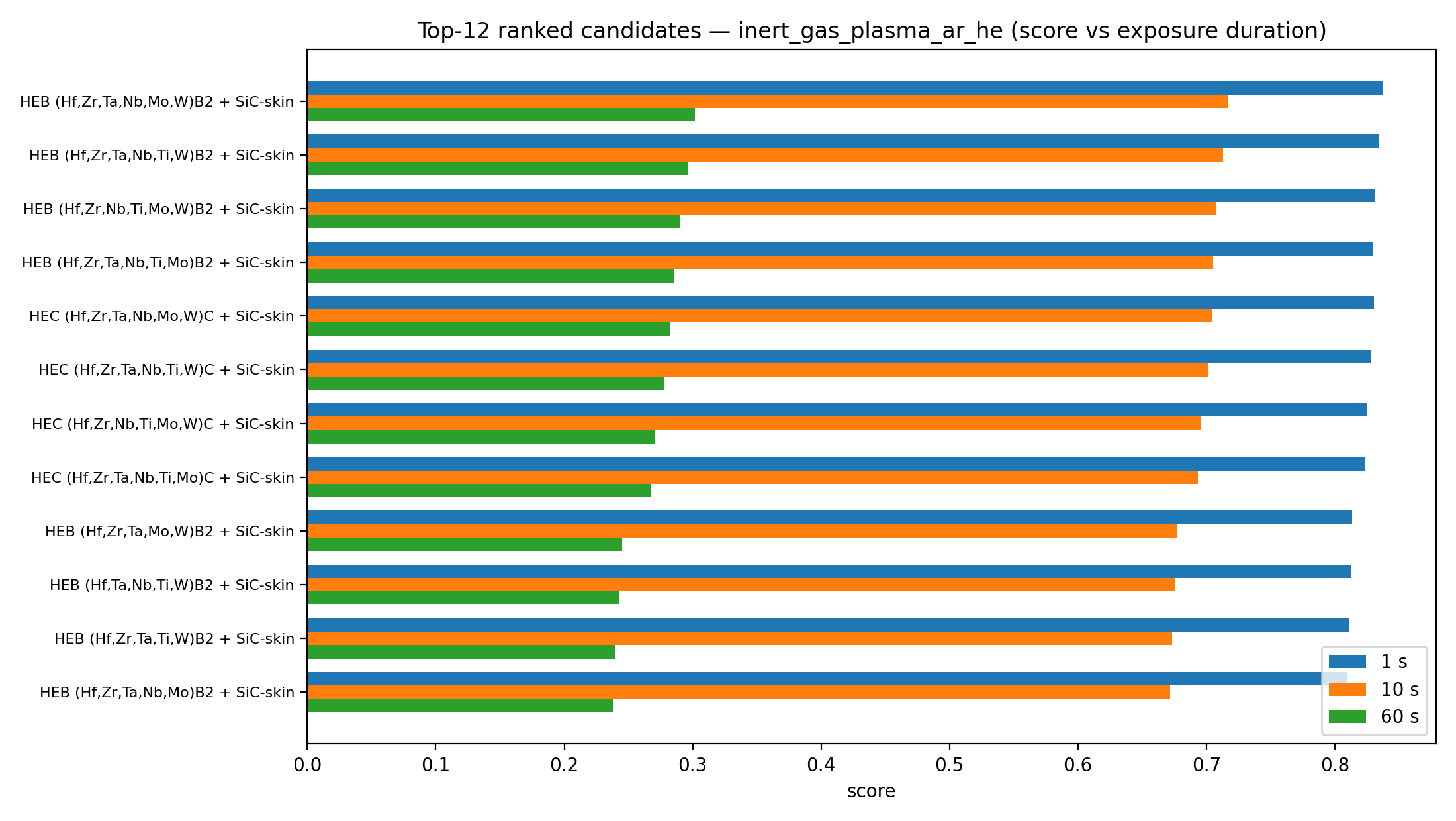
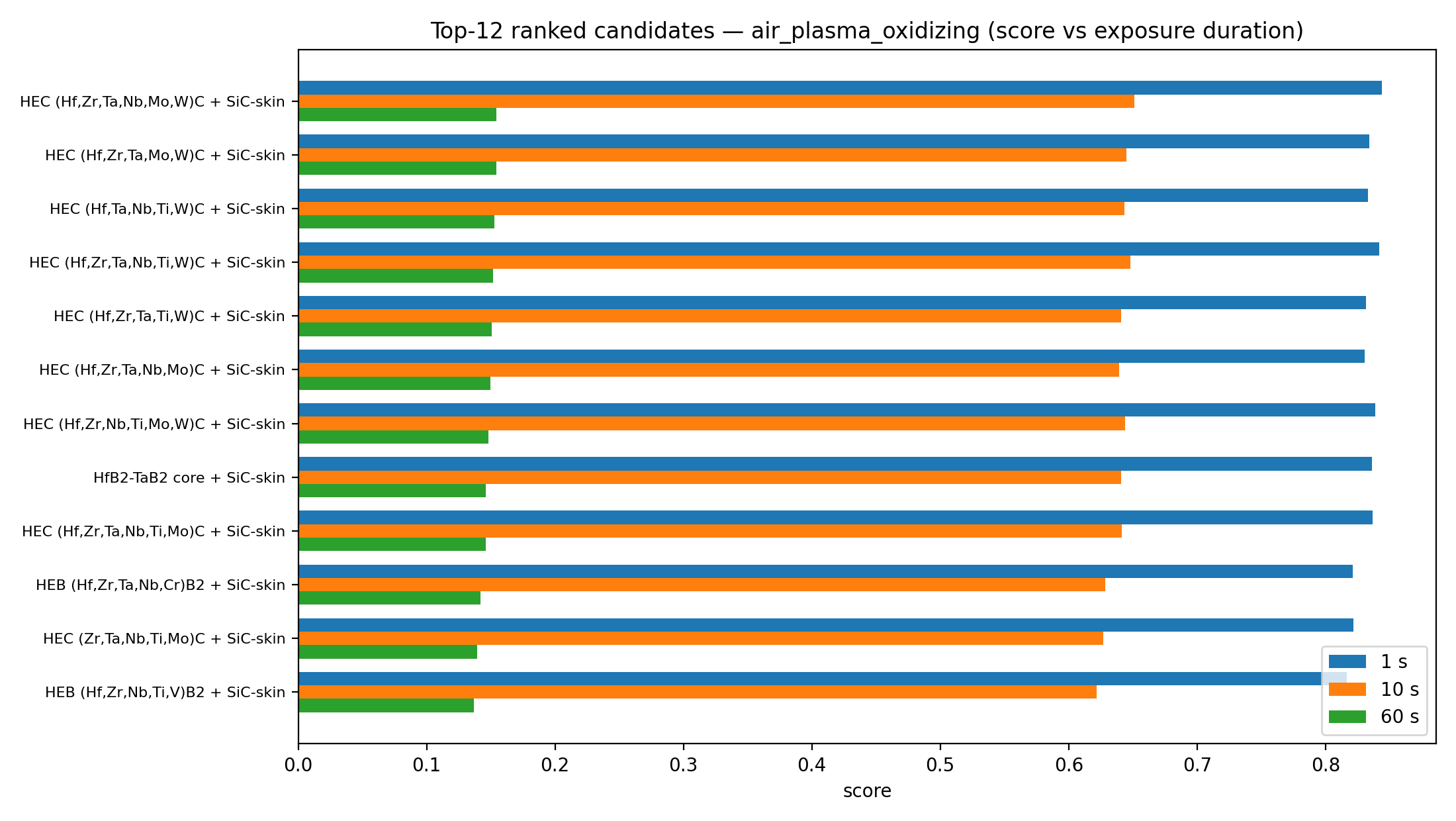
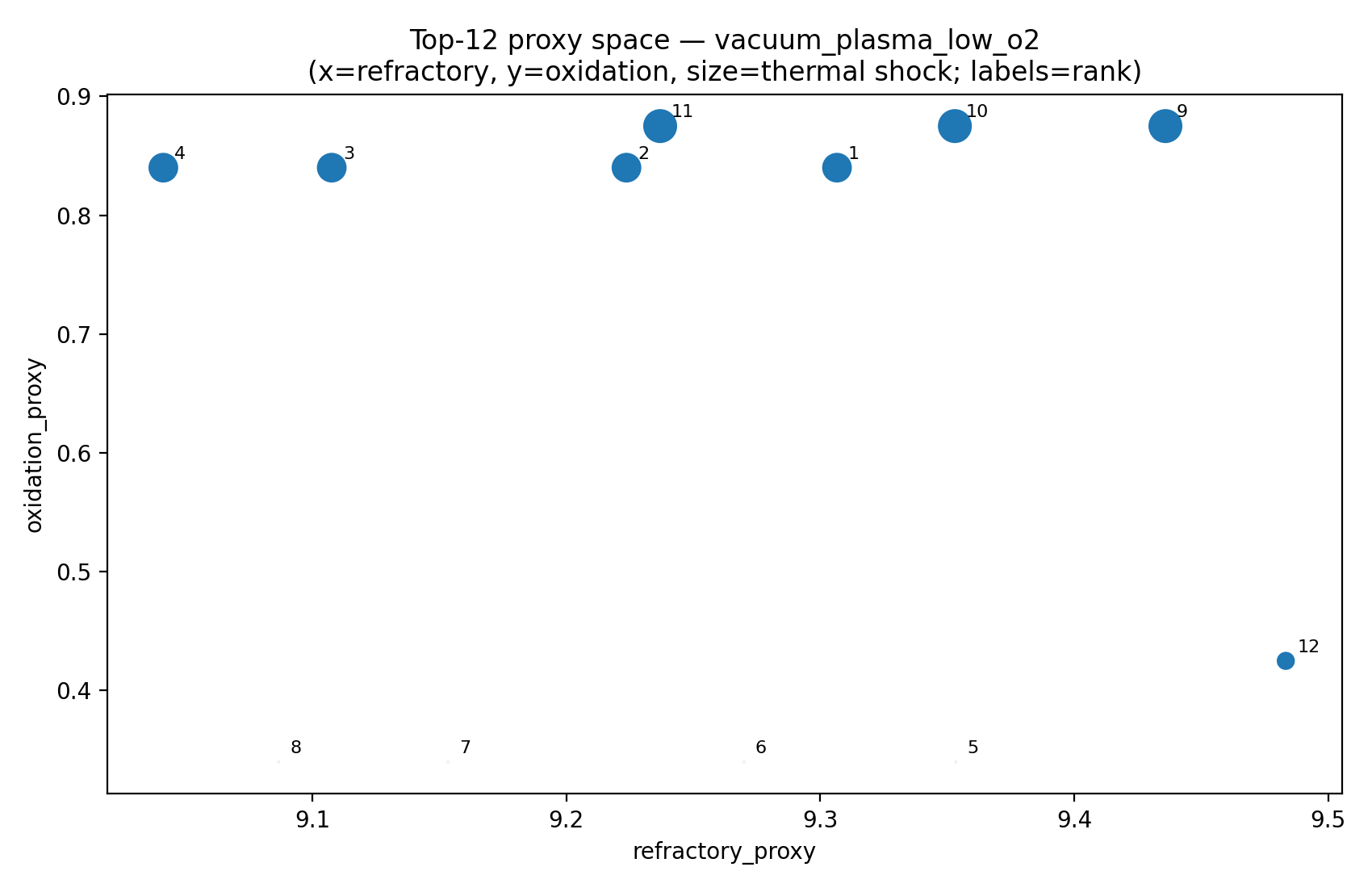
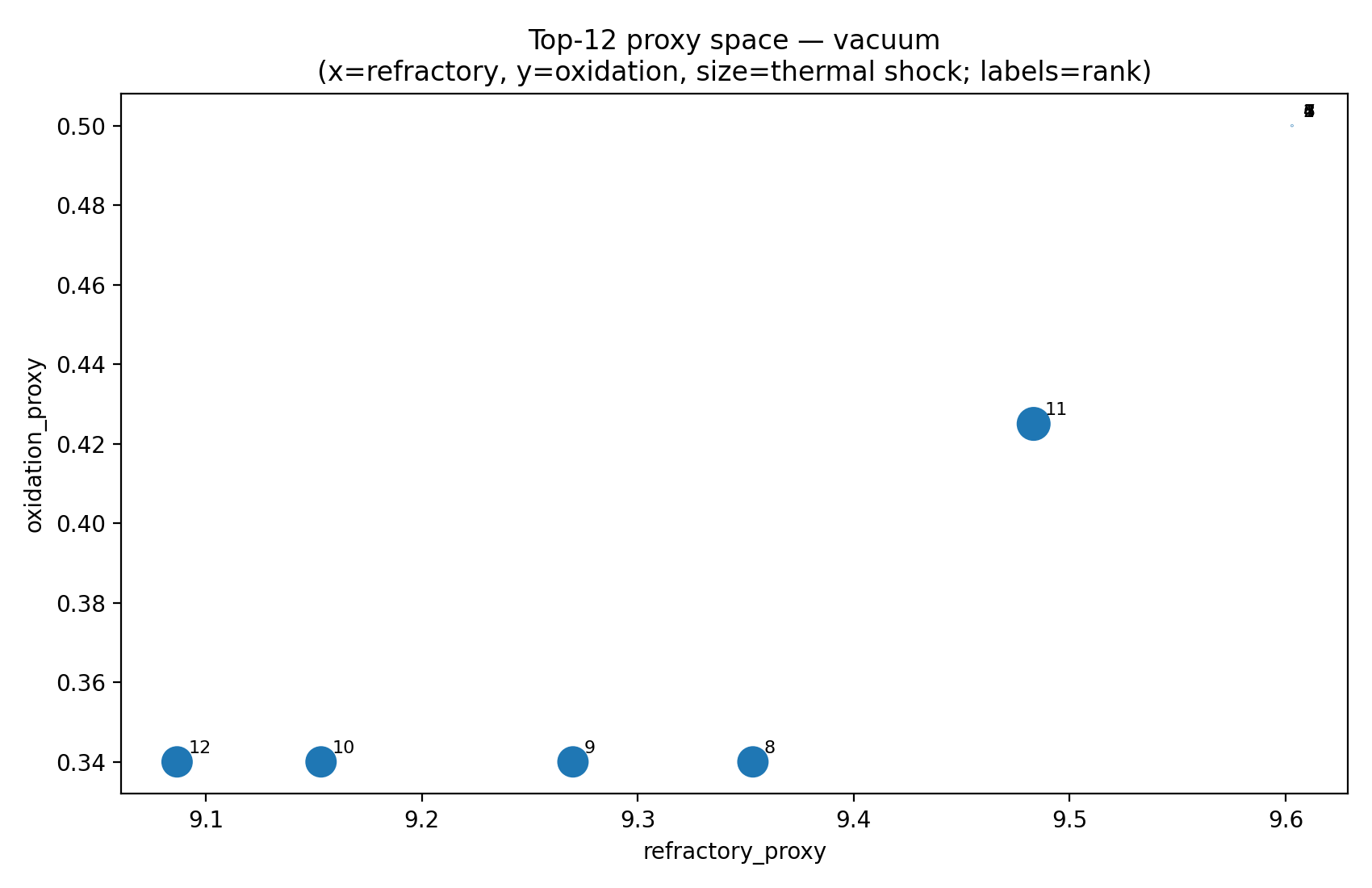
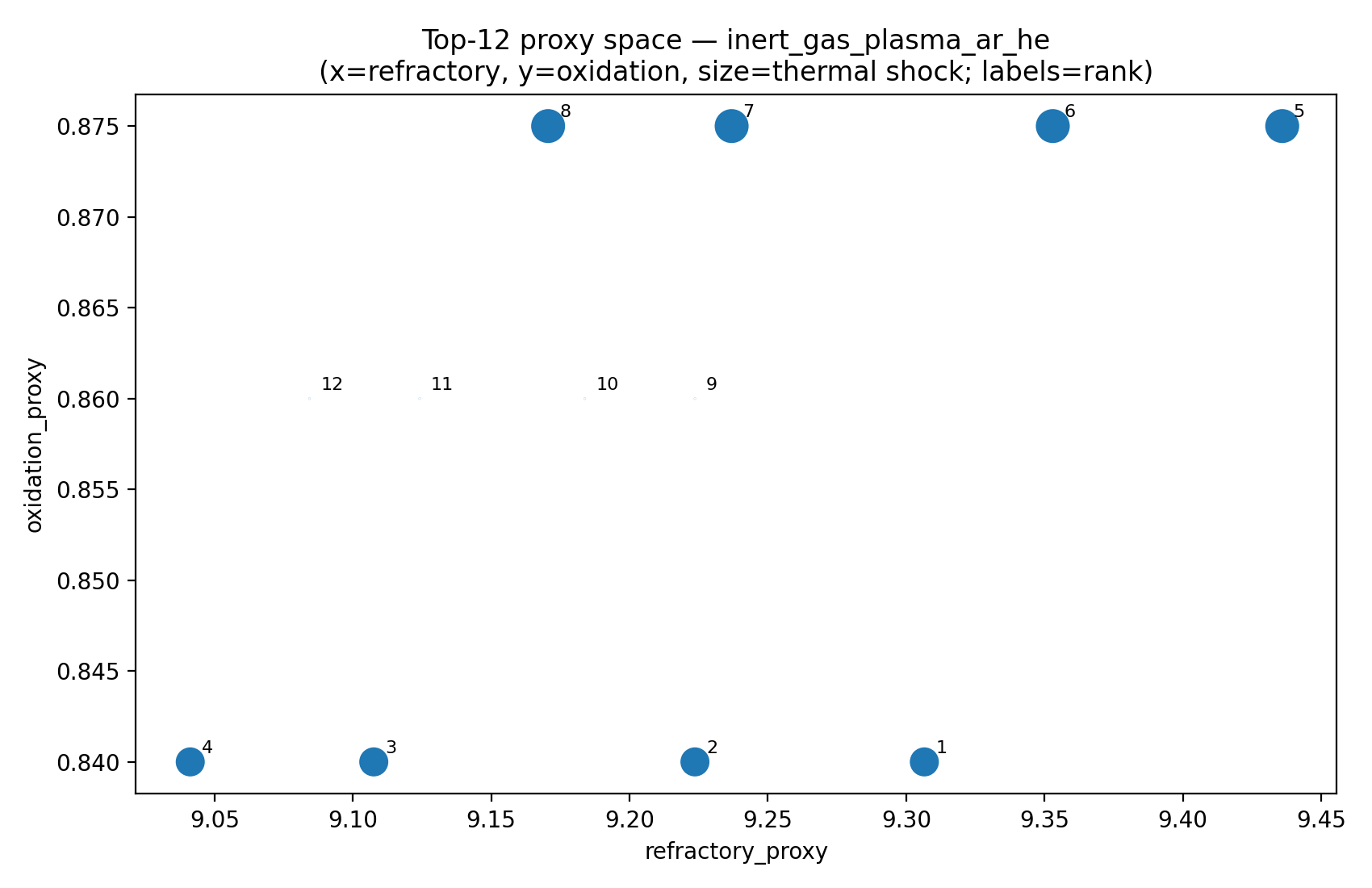
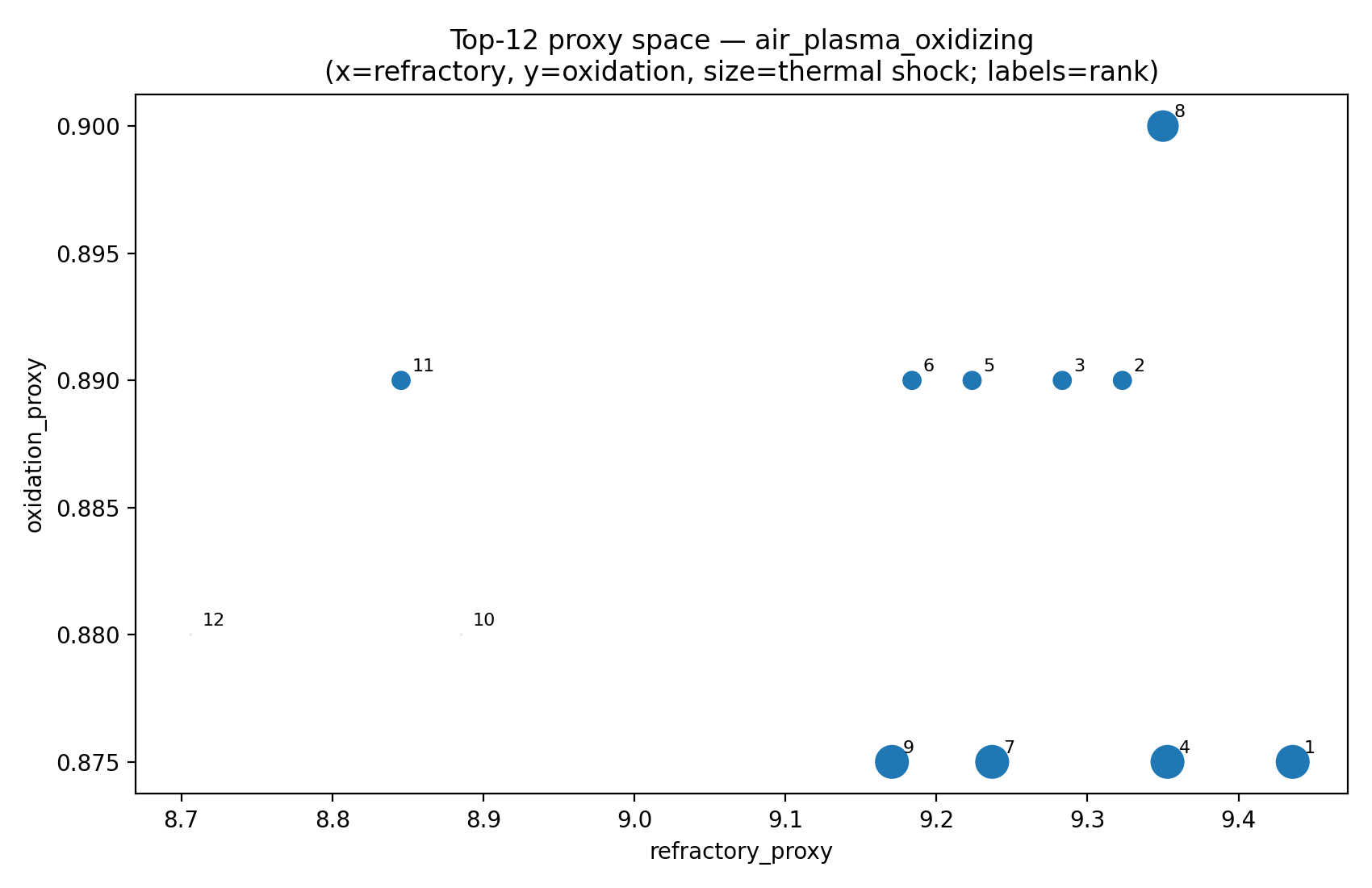
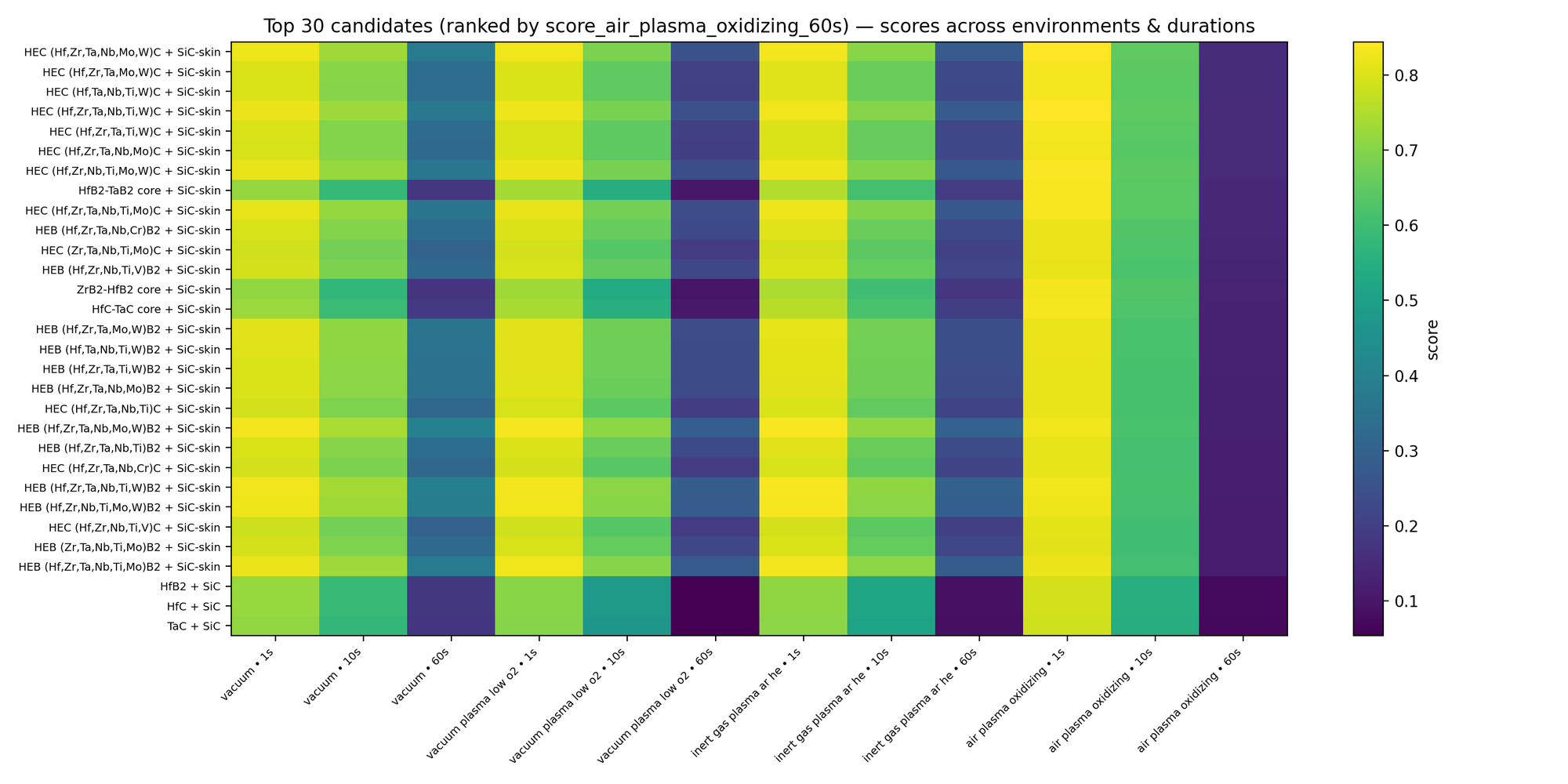
The tables below list the top‑12 candidates per scenario (ranked by the 60 s score). Scores are relative proxies (0..1) and are intended for down‑selection, not as absolute melting points.
Vacuum
|
candidate |
family |
additives |
refractory_proxy |
oxidation_proxy |
thermal_shock_proxy |
vacuum_proxy |
plasma_proxy |
score_1s |
score_10s |
score_60s |
|
HEB (Hf,Zr,Ta,Nb,Mo,W)B2 + SiC-skin |
gradient_composite |
SiC-skin |
9.306567 |
0.840000 |
0.690000 |
0.830000 |
0.900000 |
0.859660 |
0.814790 |
0.604934 |
|
HEB (Hf,Zr,Ta,Nb,Ti,W)B2 + SiC-skin |
gradient_composite |
SiC-skin |
9.223650 |
0.840000 |
0.690000 |
0.830000 |
0.900000 |
0.855932 |
0.811093 |
0.601515 |
|
HEC (Hf,Zr,Ta,Nb,Mo,W)C + SiC-skin |
gradient_composite |
SiC-skin |
9.435917 |
0.875000 |
0.710000 |
0.810000 |
0.880000 |
0.860351 |
0.814381 |
0.600260 |
|
HEC (Hf,Zr,Ta,Nb,Ti,W)C + SiC-skin |
gradient_composite |
SiC-skin |
9.353000 |
0.875000 |
0.710000 |
0.810000 |
0.880000 |
0.856623 |
0.810689 |
0.596871 |
|
HEB (Hf,Zr,Nb,Ti,Mo,W)B2 + SiC-skin |
gradient_composite |
SiC-skin |
9.107567 |
0.840000 |
0.690000 |
0.830000 |
0.900000 |
0.850712 |
0.805920 |
0.596743 |
|
HEB (Hf,Zr,Ta,Nb,Ti,Mo)B2 + SiC-skin |
gradient_composite |
SiC-skin |
9.041233 |
0.840000 |
0.690000 |
0.830000 |
0.900000 |
0.847730 |
0.802965 |
0.594023 |
|
HEC (Hf,Zr,Nb,Ti,Mo,W)C + SiC-skin |
gradient_composite |
SiC-skin |
9.236917 |
0.875000 |
0.710000 |
0.810000 |
0.880000 |
0.851405 |
0.805523 |
0.592139 |
|
HEC (Hf,Zr,Ta,Nb,Ti,Mo)C + SiC-skin |
gradient_composite |
SiC-skin |
9.170583 |
0.875000 |
0.710000 |
0.810000 |
0.880000 |
0.848423 |
0.802573 |
0.589441 |
|
HEB (Hf,Zr,Ta,Nb,Mo,W)B2 |
high_entropy_boride |
nan |
9.353333 |
0.340000 |
0.630000 |
0.880000 |
0.850000 |
0.857316 |
0.808655 |
0.584492 |
|
HEC (Hf,Zr,Ta,Nb,Mo,W)C |
high_entropy_carbide |
nan |
9.483333 |
0.425000 |
0.650000 |
0.860000 |
0.840000 |
0.859611 |
0.810486 |
0.584472 |
|
HEB (Hf,Zr,Ta,Mo,W)B2 + SiC-skin |
gradient_composite |
SiC-skin |
9.223650 |
0.860000 |
0.640000 |
0.810000 |
0.880000 |
0.840320 |
0.794560 |
0.582138 |
|
HEB (Hf,Zr,Ta,Nb,Ti,W)B2 |
high_entropy_boride |
nan |
9.270000 |
0.340000 |
0.630000 |
0.880000 |
0.850000 |
0.853571 |
0.804960 |
0.581167 |
Vacuum + Plasma (near‑zero O₂, duty 6.9%)
|
candidate |
family |
additives |
refractory_proxy |
oxidation_proxy |
thermal_shock_proxy |
vacuum_proxy |
plasma_proxy |
score_1s |
score_10s |
score_60s |
|
HEB (Hf,Zr,Ta,Nb,Mo,W)B2 + SiC-skin |
gradient_composite |
SiC-skin |
9.306567 |
0.840000 |
0.690000 |
0.830000 |
0.900000 |
0.862912 |
0.859767 |
0.842500 |
|
HEC (Hf,Zr,Ta,Nb,Mo,W)C + SiC-skin |
gradient_composite |
SiC-skin |
9.435917 |
0.875000 |
0.710000 |
0.810000 |
0.880000 |
0.862078 |
0.858860 |
0.841199 |
|
HEB (Hf,Zr,Ta,Nb,Ti,W)B2 + SiC-skin |
gradient_composite |
SiC-skin |
9.223650 |
0.840000 |
0.690000 |
0.830000 |
0.900000 |
0.859596 |
0.856450 |
0.839185 |
|
HEC (Hf,Zr,Ta,Nb,Ti,W)C + SiC-skin |
gradient_composite |
SiC-skin |
9.353000 |
0.875000 |
0.710000 |
0.810000 |
0.880000 |
0.858762 |
0.855544 |
0.837886 |
|
HEC (Hf,Zr,Ta,Nb,Mo,W)C |
high_entropy_carbide |
nan |
9.483333 |
0.425000 |
0.650000 |
0.860000 |
0.840000 |
0.859448 |
0.855985 |
0.837003 |
|
HEB (Hf,Zr,Ta,Nb,Mo,W)B2 |
high_entropy_boride |
nan |
9.353333 |
0.340000 |
0.630000 |
0.880000 |
0.850000 |
0.858251 |
0.854813 |
0.835967 |
|
HEB (Hf,Zr,Nb,Ti,Mo,W)B2 + SiC-skin |
gradient_composite |
SiC-skin |
9.107567 |
0.840000 |
0.690000 |
0.830000 |
0.900000 |
0.854953 |
0.851808 |
0.834545 |
|
HEC (Hf,Zr,Ta,Nb,Ti,W)C |
high_entropy_carbide |
nan |
9.400000 |
0.425000 |
0.650000 |
0.860000 |
0.840000 |
0.856115 |
0.852654 |
0.833680 |
|
HEC (Hf,Zr,Nb,Ti,Mo,W)C + SiC-skin |
gradient_composite |
SiC-skin |
9.236917 |
0.875000 |
0.710000 |
0.810000 |
0.880000 |
0.854118 |
0.850902 |
0.833250 |
|
HEB (Hf,Zr,Ta,Nb,Ti,W)B2 |
high_entropy_boride |
nan |
9.270000 |
0.340000 |
0.630000 |
0.880000 |
0.850000 |
0.854917 |
0.851482 |
0.832644 |
|
HEB (Hf,Zr,Ta,Nb,Ti,Mo)B2 + SiC-skin |
gradient_composite |
SiC-skin |
9.041233 |
0.840000 |
0.690000 |
0.830000 |
0.900000 |
0.852299 |
0.849155 |
0.831895 |
|
HEC (Hf,Zr,Ta,Nb,Ti,Mo)C + SiC-skin |
gradient_composite |
SiC-skin |
9.170583 |
0.875000 |
0.710000 |
0.810000 |
0.880000 |
0.851465 |
0.848249 |
0.830601 |
Inert gas (Ar/He) + Plasma (duty 6.9%)
|
candidate |
family |
additives |
refractory_proxy |
oxidation_proxy |
thermal_shock_proxy |
vacuum_proxy |
plasma_proxy |
score_1s |
score_10s |
score_60s |
|
HEC (Hf,Zr,Ta,Nb,Mo,W)C + SiC-skin |
gradient_composite |
SiC-skin |
9.435917 |
0.875000 |
0.710000 |
0.810000 |
0.880000 |
0.864086 |
0.861134 |
0.844917 |
|
HEB (Hf,Zr,Ta,Nb,Mo,W)B2 + SiC-skin |
gradient_composite |
SiC-skin |
9.306567 |
0.840000 |
0.690000 |
0.830000 |
0.900000 |
0.862829 |
0.859946 |
0.844105 |
|
HEC (Hf,Zr,Ta,Nb,Ti,W)C + SiC-skin |
gradient_composite |
SiC-skin |
9.353000 |
0.875000 |
0.710000 |
0.810000 |
0.880000 |
0.860935 |
0.857982 |
0.841759 |
|
HEB (Hf,Zr,Ta,Nb,Ti,W)B2 + SiC-skin |
gradient_composite |
SiC-skin |
9.223650 |
0.840000 |
0.690000 |
0.830000 |
0.900000 |
0.859678 |
0.856793 |
0.840945 |
|
HEC (Hf,Zr,Nb,Ti,Mo,W)C + SiC-skin |
gradient_composite |
SiC-skin |
9.236917 |
0.875000 |
0.710000 |
0.810000 |
0.880000 |
0.856524 |
0.853569 |
0.837339 |
|
HEB (Hf,Zr,Nb,Ti,Mo,W)B2 + SiC-skin |
gradient_composite |
SiC-skin |
9.107567 |
0.840000 |
0.690000 |
0.830000 |
0.900000 |
0.855266 |
0.852380 |
0.836523 |
|
HEC (Hf,Zr,Ta,Nb,Ti,Mo)C + SiC-skin |
gradient_composite |
SiC-skin |
9.170583 |
0.875000 |
0.710000 |
0.810000 |
0.880000 |
0.854003 |
0.851048 |
0.834814 |
|
HEB (Hf,Zr,Ta,Nb,Ti,Mo)B2 + SiC-skin |
gradient_composite |
SiC-skin |
9.041233 |
0.840000 |
0.690000 |
0.830000 |
0.900000 |
0.852745 |
0.849859 |
0.833997 |
|
HEB (Hf,Zr,Ta,Mo,W)B2 + SiC-skin |
gradient_composite |
SiC-skin |
9.223650 |
0.860000 |
0.640000 |
0.810000 |
0.880000 |
0.844770 |
0.841816 |
0.825591 |
|
HEC (Hf,Zr,Ta,Mo,W)C + SiC-skin |
gradient_composite |
SiC-skin |
9.323150 |
0.890000 |
0.660000 |
0.790000 |
0.860000 |
0.844643 |
0.841620 |
0.825021 |
|
HEB (Hf,Ta,Nb,Ti,W)B2 + SiC-skin |
gradient_composite |
SiC-skin |
9.183850 |
0.860000 |
0.640000 |
0.810000 |
0.880000 |
0.843257 |
0.840303 |
0.824077 |
|
HEC (Hf,Ta,Nb,Ti,W)C + SiC-skin |
gradient_composite |
SiC-skin |
9.283350 |
0.890000 |
0.660000 |
0.790000 |
0.860000 |
0.843131 |
0.840107 |
0.823507 |
Air + Plasma (oxidizing, duty 6.9%)
|
candidate |
family |
additives |
refractory_proxy |
oxidation_proxy |
thermal_shock_proxy |
vacuum_proxy |
plasma_proxy |
score_1s |
score_10s |
score_60s |
|
HEC (Hf,Zr,Ta,Nb,Mo,W)C + SiC-skin |
gradient_composite |
SiC-skin |
9.435917 |
0.875000 |
0.710000 |
0.810000 |
0.880000 |
0.865198 |
0.864037 |
0.857610 |
|
HEC (Hf,Zr,Ta,Nb,Ti,W)C + SiC-skin |
gradient_composite |
SiC-skin |
9.353000 |
0.875000 |
0.710000 |
0.810000 |
0.880000 |
0.862710 |
0.861539 |
0.855066 |
|
HEC (Hf,Zr,Nb,Ti,Mo,W)C + SiC-skin |
gradient_composite |
SiC-skin |
9.236917 |
0.875000 |
0.710000 |
0.810000 |
0.880000 |
0.859226 |
0.858044 |
0.851504 |
|
HEC (Hf,Zr,Ta,Nb,Ti,Mo)C + SiC-skin |
gradient_composite |
SiC-skin |
9.170583 |
0.875000 |
0.710000 |
0.810000 |
0.880000 |
0.857235 |
0.856046 |
0.849469 |
|
HEB (Hf,Zr,Ta,Nb,Mo,W)B2 + SiC-skin |
gradient_composite |
SiC-skin |
9.306567 |
0.840000 |
0.690000 |
0.830000 |
0.900000 |
0.855569 |
0.854413 |
0.848022 |
|
HEB (Hf,Zr,Ta,Nb,Ti,W)B2 + SiC-skin |
gradient_composite |
SiC-skin |
9.223650 |
0.840000 |
0.690000 |
0.830000 |
0.900000 |
0.853080 |
0.851916 |
0.845479 |
|
HEC (Hf,Zr,Ta,Mo,W)C + SiC-skin |
gradient_composite |
SiC-skin |
9.323150 |
0.890000 |
0.660000 |
0.790000 |
0.860000 |
0.852055 |
0.850802 |
0.843875 |
|
HEC (Hf,Ta,Nb,Ti,W)C + SiC-skin |
gradient_composite |
SiC-skin |
9.283350 |
0.890000 |
0.660000 |
0.790000 |
0.860000 |
0.850861 |
0.849604 |
0.842655 |
|
HEB (Hf,Zr,Nb,Ti,Mo,W)B2 + SiC-skin |
gradient_composite |
SiC-skin |
9.107567 |
0.840000 |
0.690000 |
0.830000 |
0.900000 |
0.849596 |
0.848421 |
0.841918 |
|
HEC (Hf,Zr,Ta,Ti,W)C + SiC-skin |
gradient_composite |
SiC-skin |
9.223650 |
0.890000 |
0.660000 |
0.790000 |
0.860000 |
0.849069 |
0.847806 |
0.840825 |
|
HEB (Hf,Zr,Ta,Nb,Ti,Mo)B2 + SiC-skin |
gradient_composite |
SiC-skin |
9.041233 |
0.840000 |
0.690000 |
0.830000 |
0.900000 |
0.847606 |
0.846423 |
0.839884 |
|
HEC (Hf,Zr,Ta,Nb,Mo)C + SiC-skin |
gradient_composite |
SiC-skin |
9.183850 |
0.890000 |
0.660000 |
0.790000 |
0.860000 |
0.847875 |
0.846608 |
0.839606 |
6. Interpretation and design guidance
Across all four regimes, high‑entropy carbides/borides with a SiC‑skin repeatedly appear at the top. This is consistent with the intuition that multi‑principal‑element lattices can increase configurational entropy and hinder diffusion/creep, while SiC‑based outer layers improve oxidation resistance and can form protective silica in oxidizing environments. In vacuum and plasma regimes, the ranking is driven more strongly by refractory and plasma proxies than by oxidation behavior.
Practical guidance for reactor build iterations:
· Start with a HEC/HEB core (Hf/Zr/Ta/Nb/Mo/W‑based) and evaluate manufacturability (SPS/hot pressing) and cracking risk.
· Use a graded interface (e.g., HEC → HEC+SiC → SiC‑rich skin) to reduce CTE mismatch and thermal shock failure.
· For air+plasma, prioritize candidates with strong oxidation proxies (stable, slow‑growing oxides; low volatility).
· Treat plasma duty cycle as a first‑class parameter: lowering duty reduces effective erosion time and improves survival score.
7. Limitations and next steps
This screening does not claim a guaranteed ‘>5000 °C melting point’ prediction. Instead it provides an actionable ranking to guide experiments. Next steps are: (i) calibrate proxy weights to seed benchmarks (known UHTCs), (ii) integrate higher‑fidelity QFG‑DFT calculations for cohesive energies, elastic tensors, phonons, and defect barriers, (iii) include explicit oxidation kinetics models for air+plasma, and (iv) validate via short‑pulse plasma exposure and arc‑jet style tests.
Author: Victor Pronchev (with QAI, codename ‘Etherius’)
Date: 2026-01-23